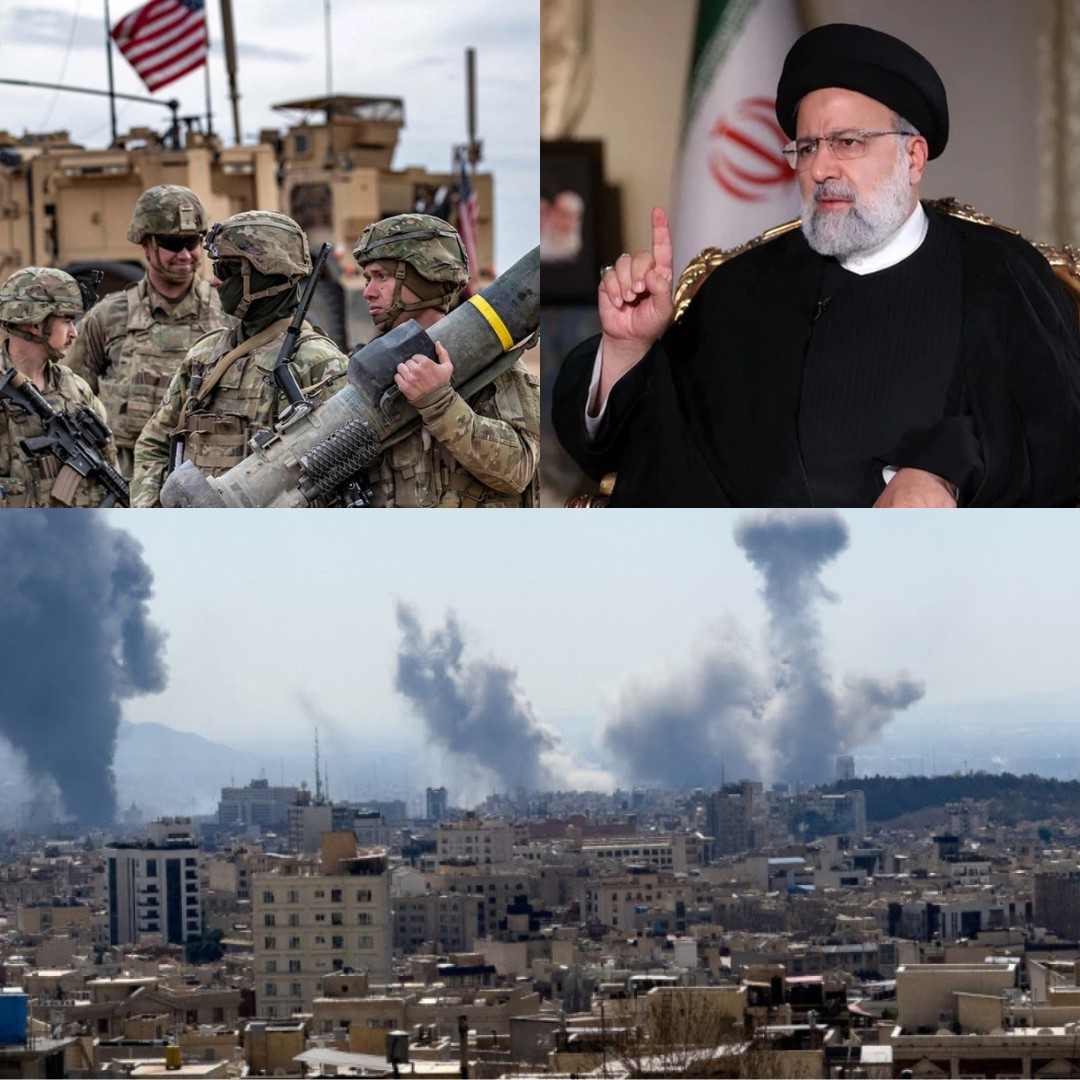
In the early hours of a tense and closely watched day, global attention shifted rapidly toward the growing confrontation between the United States and Iran, as reports emerged describing a large-scale wave of coordinated air and precision strikes across multiple strategic zones. While details continued to evolve throughout the day, early briefings and regional monitoring sources suggested that the scale and timing of the operation were unusual, particularly because many of the reported actions occurred during daylight hours rather than under the cover of darkness, which is more typical for complex military operations.
Analysts immediately began comparing the developments to previous periods of heightened tension in the region, noting that timing often plays a strategic role in signaling intent. Daytime operations can carry both operational risks and psychological messaging, as visibility increases public awareness and accelerates global media reaction. Within minutes of the first alerts, international newsrooms shifted into continuous coverage mode, while security analysts attempted to verify the scope and targets involved.
According to early open-source assessments circulating among defense observers, several categories of infrastructure were reportedly involved, including facilities associated with missile storage, logistical coordination hubs, and communication-linked installations. However, as with many fast-moving geopolitical events, confirmation remained fragmented, with multiple interpretations emerging across different regions and information channels.
In the capital city of Tehran, social media activity increased dramatically as residents described heightened air defense activity and temporary disruptions in some districts. Videos and unverified clips began circulating online, though experts cautioned viewers about the difficulty of authenticating real-time footage during rapidly unfolding conflicts. Digital misinformation researchers also warned that older clips from unrelated events are often reshared during breaking geopolitical stories, adding to confusion.
Financial markets responded quickly to uncertainty. Energy prices showed short-term volatility as traders evaluated potential risks to supply routes and regional stability. Historically, even limited escalations in the Middle East have influenced commodity markets due to the region’s importance to global energy infrastructure. Investors monitored developments closely, particularly statements from government officials and international organizations.
Within hours, diplomatic channels also became active. Several governments released carefully worded statements encouraging restraint while emphasizing the importance of preventing further escalation. The United Nations called for verification of facts and urged all sides to avoid actions that could widen tensions. Such responses are common during uncertain security situations, as international institutions typically wait for confirmed intelligence before issuing stronger positions.
Military experts noted that modern conflict dynamics differ significantly from those of previous decades. Precision-guided technologies, unmanned aerial systems, and cyber capabilities have reshaped how operations are conducted and reported. As a result, the definition of “scale” is no longer determined purely by the number of strikes but also by their strategic purpose and technological coordination.
Another key factor discussed by analysts was signaling. In geopolitics, actions often carry layered meanings beyond their immediate tactical goals. Demonstrating capability, deterrence, and response thresholds all play roles in shaping how each side interprets developments. Experts emphasized that public messaging following such events is often as important as the operational details themselves.
Throughout the day, global audiences followed live updates as commentators debated possible scenarios. Some analysts suggested the developments could remain limited if diplomatic engagement increased quickly. Others warned that misinterpretation or rapid retaliation cycles could intensify instability. The uncertainty itself became one of the most significant elements driving international concern.
Strategic scholars also highlighted the importance of historical context. Relations between the United States and Iran have experienced multiple phases of tension over several decades, often influenced by regional alliances, security concerns, and political shifts. Because of this history, any sudden escalation tends to attract immediate global attention.
At the same time, experts cautioned against drawing early conclusions. Initial reports in conflict situations frequently change as more reliable intelligence becomes available. Satellite analysis, independent verification groups, and official briefings typically clarify details over several days rather than hours.
Public reaction online reflected the emotional weight of the situation. Hashtags related to regional stability and global security began trending across multiple platforms. Many users expressed concern about the broader consequences of escalation, while others focused on the economic implications or geopolitical strategy.
Media analysts also observed how rapidly modern information ecosystems amplify breaking events. Compared to past decades, real-time updates now travel globally within seconds, shaping public perception before full verification occurs. This shift has transformed how audiences experience international news, making clarity and responsible reporting more important than ever.
Meanwhile, diplomatic observers began watching for indirect signals. In many geopolitical situations, official statements are carefully calibrated, and subtle language changes can indicate shifts in strategy or intent. Analysts tracked wording from spokespersons, looking for clues about whether the developments were expected to remain limited or potentially expand.
Defense experts emphasized that regional stability often depends on communication channels remaining open, even during moments of tension. Crisis-management frameworks have historically helped prevent misunderstandings from escalating into broader conflicts. These mechanisms, while rarely visible to the public, play a critical role behind the scenes.
Economic analysts also pointed out that global markets often react more strongly to uncertainty than to confirmed outcomes. As new information emerges, volatility typically stabilizes. However, during early reporting phases, speculation can temporarily influence investor sentiment.
Another dimension of the story involved technological observation. Satellite imagery, flight tracking tools, and open-source intelligence communities have become increasingly influential in modern conflict analysis. Independent researchers frequently compile publicly available data to estimate timelines and operational patterns, though such assessments remain subject to verification.
As discussions continued, regional experts noted that public interpretation of events can differ significantly depending on geographic perspective. Media framing, political context, and historical alliances often influence how audiences interpret the same developments.
Throughout the evolving coverage, one theme remained consistent: uncertainty. Without complete verification, analysts continued emphasizing caution in interpreting early numbers or operational claims. This approach reflects broader shifts in modern journalism toward verification-first reporting, especially in fast-moving geopolitical situations.
In the hours that followed, global leaders continued monitoring developments closely. Strategic analysts suggested that the next phase would likely depend on diplomatic messaging and measured responses rather than immediate operational expansion. Historically, moments like these often become turning points not only for regional security but also for international policy discussions.
Observers also pointed to the role of communication strategy in shaping outcomes. Clear messaging can reduce misinterpretation, while ambiguous statements sometimes increase speculation. Because of this, press briefings and official updates are often closely analyzed by both media and policy communities.
While the full implications remained uncertain, experts agreed that the situation highlighted the fragile balance of modern geopolitical stability. Even limited developments can trigger global reactions across economic, diplomatic, and informational systems.
As more verified details emerge, analysts expect a clearer understanding of the operational scope and strategic intent behind the reported actions. Until then, international attention remains focused on whether diplomatic engagement can stabilize tensions or whether further developments will reshape the broader security landscape.
For now, the world continues to watch closely—waiting for confirmation, context, and the next signal that may determine how this unfolding chapter in international relations will ultimately be remembered.